Trending

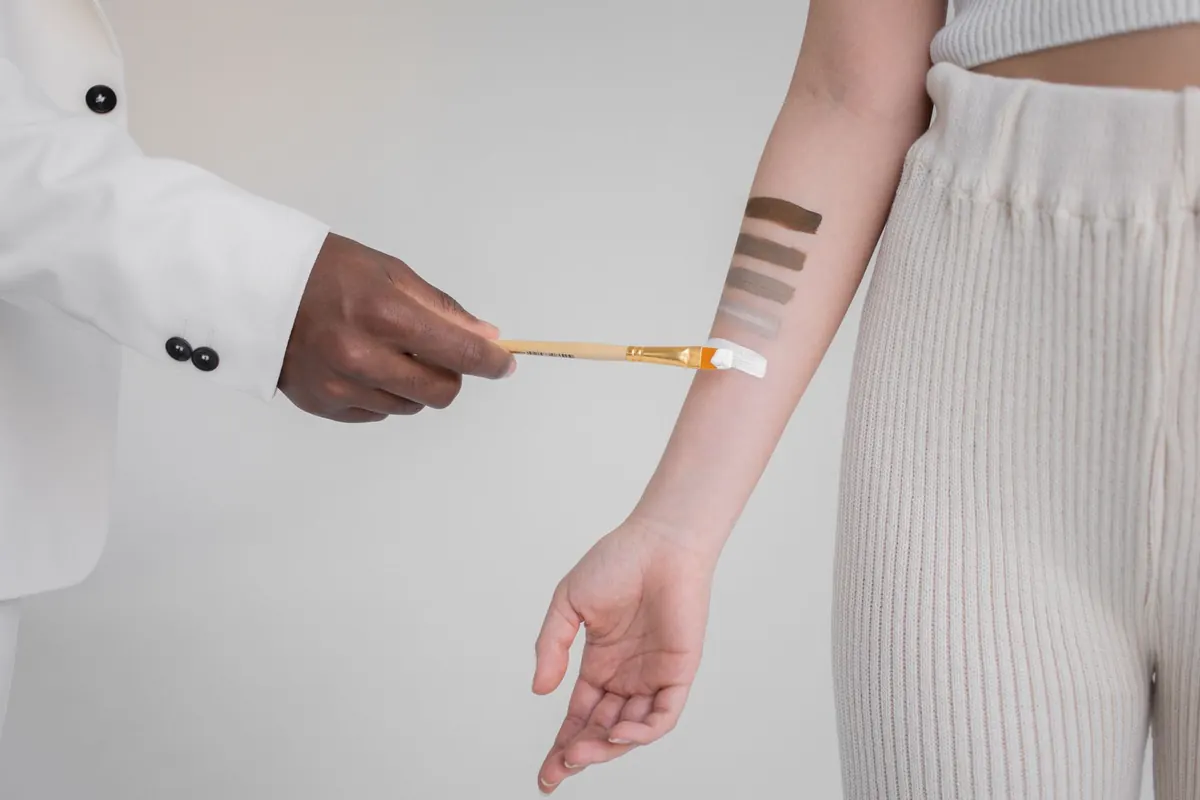
Most makeup disappointments have nothing to do with skill. A lipstick that looked luminous on a friend turns chalky on you. A foundation that seemed to match indoors goes grey the moment you step outside. The difference is usually undertone — the quiet cast beneath your skin that decides whether a colour flatters you or fights you.
Finding yours takes about ten minutes, decent daylight, and a few things you already own. No counter consultation required.
Undertone is the underlying hue of your skin: warm (yellow, golden, peachy), cool (pink, red, bluish), or neutral (a balance of the two). Olive sits alongside these as its own category.
It is not the same thing as depth. Depth is how light or deep your skin is. Undertone is the colour running underneath. Two people who wear the same foundation depth can need completely different formulas, which is why "I'm the second-lightest shade" tells you almost nothing useful.
There's also overtone — the surface colour sitting on top. Freckles, redness across the cheeks, a fading tan, or a slightly sallow cast can all mask what's happening underneath. If your face is noticeably pinker than your neck, trust your neck.
Do these bare-faced, in natural daylight, near a window. Indoor bulbs run warm and will skew your answers.
No single test is definitive. Two or three pointing the same direction is a strong signal.
Warm-leaning people often have golden, honey, strawberry, auburn, or warm brown hair, with amber, hazel, or warm brown eyes and a scattering of freckles. Cool-leaning people often have ash brown, black, platinum, or ash blonde hair, with blue, grey, or cool green eyes. But dark hair and dark eyes appear across every undertone, and hair dye rewrites the evidence entirely. Use this as a supporting clue, not the main event.
The trap: if you have rosacea or general redness in the cheeks, your instinct is to reach for cool pink foundation. Resist it. Redness is overtone. Match to your neck or chest instead, and neutralise the redness with a green-tinted primer or corrector underneath.
Olive skin has a greenish or greyish cast, and it's the undertone most often failed by mainstream foundation lines. Olive can lean warm (more golden, common in medium and deep skin tones) or cool (more grey-green, often described as sallow rather than peachy).
Practically, this means most foundations pull pink or orange on you, and a shade that looks neutral in the bottle can turn peach by mid-afternoon. Look for lines that label shades as olive, or add a drop of green or blue colour corrector to a foundation that's slightly too warm. It's the most trial-and-error undertone there is, so sample before committing.
Swatch along your jawline and blend down toward your neck — not on your hand, which is usually a different colour, and not on your cheek, which may be redder than the rest of you. Then step outside with the swatch still on. Let it sit for ten minutes before you judge it; some formulas oxidise and turn darker or more orange as they settle.
Get the hue right and the depth close. A mixer or corrector can fix a shade that's half a step off, but nothing rescues a foundation that's simply the wrong undertone.
A rough map, to be adjusted to taste:
Saturation matters too. Warm undertones often carry richer, more saturated colour well, while cool undertones tend to look sharper in clearer, cooler shades.
Buy from shops with a returns policy, and ask for samples whenever they're offered. Apply foundation to half your face only and wear it for a full day, checking in daylight at least twice — once an hour after application, once in the afternoon. Photographs can help, but phone cameras adjust colour automatically, so don't rely on a selfie as your final verdict. Lipstick and blush are lower stakes than base products; a lip colour that's slightly off is a mood, a foundation that's off is a problem.
Stand at a window with no makeup on. Run the vein, jewellery, and white-versus-cream tests. Note which way two or three of them lean. Then take those notes to a counter, ask for two or three foundation samples in that direction, and wear each one for a day before deciding.
Treat the result as a starting point rather than a rule. Plenty of cool-toned people look extraordinary in a warm brick red, and a gold eyeshadow flatters almost everyone. Undertone tells you where to begin, not what you're allowed to wear. If you're dealing with persistent redness, irritation, or a diagnosed skin condition, it's worth talking to a dermatologist or pharmacist before you build a routine around covering it.
Photo: Monstera Production / Pexels