Trending

A mood board is not a shrine to a person you will never be. It is a reference sheet you check before you buy, before you get dressed, before you talk yourself into a lime-green coat. Most style boards fail for one reason: they are built from fantasy. Runway shots, editorial spreads, a red-carpet gown with nowhere to go. The fix is to build one quickly, from things you would actually wear, and then test it against your closet before you spend a cent.
Set a timer for 30 minutes. Here is the order that works.
Before you open a single tab, go to your closet and pull out ten pieces you reach for without thinking. The jeans that fit. The knit that survives every season. The boots you have already resoled once. Lay them on the bed and look for repetition rather than favourites.
Most people find two or three colors showing up again and again, plus one silhouette they keep coming back to — a straight leg, a boxy shoulder, a midi length. Photograph the pile. That photo is the spine of the board, and it keeps everything else honest.
Fifteen minutes, hard stop. Save first, judge later. Pull from street style photos, brands you already own, film stills, interiors, album covers, old pictures of yourself from a year you liked how you dressed. Anything visual counts.
What to save:
What to skip: anything that requires a stylist, a different body, a different climate, or an occasion you do not have. A board full of maybes gives you nothing to act on.
Vague searches return vague results. Type what you actually want to see: "charcoal knit midi skirt outfit," "oversized blazer with straight jeans," "brown leather jacket street style." Specific queries surface real outfits worn by real people, which is exactly what you need. If you keep landing on images that feel off, your search terms are telling you something — change the words, not your taste.
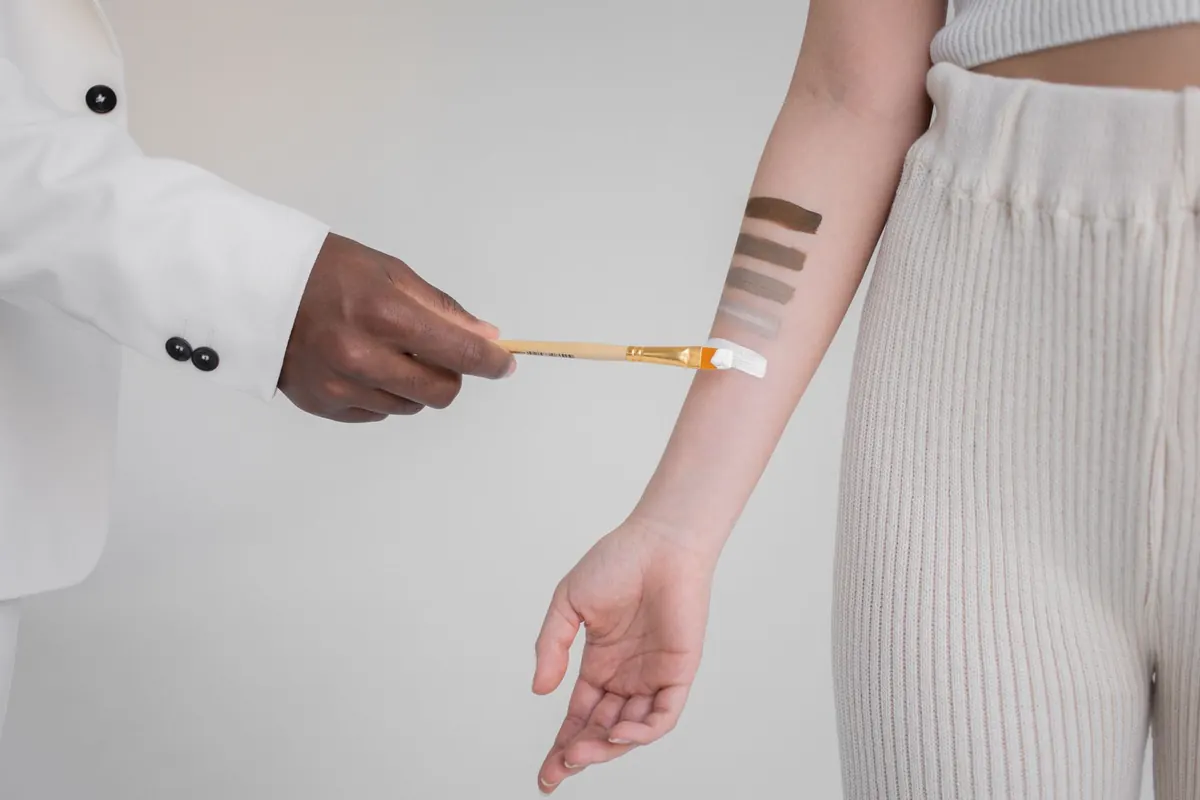
Put your saved images into one grid and squint. Notice what dominates. Then name the colors out loud, in plain language, and write them down. Cream. Warm grey. Dark brown. Oxblood. Black.
A palette that works usually looks like this: two neutrals you already own, one anchor color that carries the mood, and one accent for interest. Four or five total is plenty. More than that and nothing reads as intentional.
Now hold the list against the photo of your closet pile. If your palette does not touch a single thing hanging in your wardrobe, you will admire it and never wear it. Adjust before you go further — this is the cheapest correction you will make all year.
Color gets the attention, but texture decides whether an outfit feels like you. Write six to eight words describing the surfaces you are drawn to. Slubby cotton. Matte wool. Brushed flannel. Crisp poplin. Tumbled leather. Fine-gauge knit.
Then write what you avoid. Maybe shine feels wrong on you, or chunky cables add bulk you do not want, or stiff tailoring makes you stiff. Knowing what to skip is half of a style direction, and it saves you from a lot of unwise purchases.
Five minutes, one screen or one sheet of paper. Digital boards and corkboards work equally well; pick whichever you will actually look at. Arrange nine to twelve images, keep a strip of your palette along one edge, and tuck the texture words into a corner. Resist the urge to add more. A board with sixty images is a filing cabinet, not a direction.
Then write a single sentence across the top.
Soft tailoring in warm neutrals with one dark accent, worn with boots.
That sentence is the point of the whole exercise. Everything else is evidence.
Before you trust the board, use it. Build three outfits using only clothes you already own, following the palette, the textures and the sentence. Wear them this week and pay attention to what feels off — too much beige, the wrong shoe, a silhouette that photographs well and moves badly.
Ask yourself:
If you cannot build a single outfit from your own closet, the board is still aspirational. Swap two images and try again. Adjust the board, not yourself.
Save it as a phone lock screen or tape it inside the closet door. Use it as a filter before you buy: if a piece does not fit the palette, the textures or the sentence, it stays in the shop, however good the sale. Revisit it once a season — twenty minutes, two or three images in, two or three out.
A good mood board narrows your choices instead of expanding them. That is what makes it useful, and it is why the whole thing only needs half an hour.
Photo: Mariakray / Pixabay